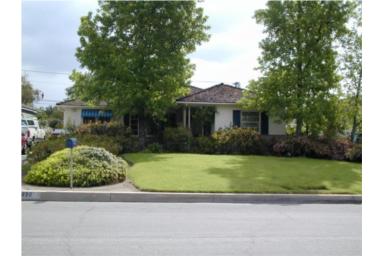
| Asking Price | $898,000 | ::: | Sq-ft | 2,000 |
| Purchased Price | $156,000 | ::: | Lot Size | 9,060 |
| Purchased Date | 09/28/1984 | ::: | Beds | 3 |
| Days on Redfin | 180 | ::: | Baths | 1.75 |
| $/Sq-ft | $449 | ::: | Year Built | 1948 |
| 20% Downpayment | $179,600 | ::: | Area | Peacock Village |
| Income Required | $224,500/yr | ::: | Type | SFR |
| Est. Payment* | $4,540/month | ::: | MLS# | A07140037 |
*Estimated monthly payment assume 20% down, 30-yr fixed @ 6.50%
Remember what happened to Shuttle Columbia back in 2003? It disintegrated upon re-entry and lives were destroyed. If the sellers at 420 Columbia don’t drop the price down to market values, they can slowly watch their equity disintegrate as well. It’s a very dated property and has been on the market for half a year. I don’t see any reason why a transaction would occur without a significant drop in price.
Listing Price History
09/23/07 $925,000
12/01/07 $899,000
02/27/08 $898,000
In six months time they’ve managed to only drop the asking price by a total of $27k or just 2.9% of the original listing price. Am I missing something here? After two months the price was reduced by $26k and then another two months later, the second reduction is a whopping $1,000. If they’re serious about selling, shouldn’t the price reductions be faster and bigger as it sits on the market longer and longer?
We have documented many properties with sellers who are refusing to accept the reality of the national real estate market decline and reduce their ridiculous asking price to market values. Because of that, their property often sits on the market for months on end – only to sell at a reduced price anyways. This chasing down of the market is not only financially draining, but also takes a huge emotional toll. The stress and uncertainty on the sellers can be a crushing weight even during better economic times so I cannot imagine the anxiety they face today.
To the many others out there, I advise you to price your property at market value. Market value is not what you paid a few years ago, what you think its worth or what your friends and neighbors say its worth. Market value is what buyers are willing to pay for your house today.
- Buyers don’t care if you overpaid.
- Buyers don’t care if you need this to fund your retirement.
- Buyers don’t care if you priced it so that you can repay that HELOC.
- Buyers don’t care what you think it’s worth.
- Buyers don’t care what your realtor says.
- Buyers don’t care. Period.
They do, however, care about getting a good price and in this market they’re looking for killer deals. In a declining RE market, market value is at or below the previous sale of a comparable property in the area. It’s not what properties sold for last year, in 2006 or in 2005. Those days are gone. Price to sell – it works only if you do it right.
i agree that this place is overpriced and is probably not going to sell. the only thing i see that the owners have going for them is that the property was purchased back in 1984, before this ridiculous housing boom. i would assume that they did not participate in 100% financing, therefore they will not have the pressure of selling before their mortgage “kicks up”.
that kind of goes back to why i value the loan information that you guys typically provide. i have a few basic assumptions that i would like to share. first, a majority of the people that have bought during this last housing boom/bubble participated in 100% financing. the second assumption is that most of these mortgages will “kick up” after 5 years. since this type of 100% financing started in roughly 2001 and peaked in 2005, performing some quick math tells me that these loans will reset from 2006 to 2010. coincidentally, the 2006 date roughly matches when the downturn began.
i believe the supply of homes will cumulatively increase as the years progress, with even more and more homes being forced to sell due to rising mortgages. therefore, i see the homes that have 100% financing with 5 yrs added to the purchase date as prime foreclosure properties, unless the owners drastically reduce their price, which they obviously have not done. the other “downward pressure” should come from the $417k jumbo loan threshold. People with good credit and decent salaries are still not going to be able to afford a “jumbo” 30 yr. fixed loan, so prices will need to gravitate towards the threshold in order to be affordable. just my 2cents.
Your rationale corresponds with the famed Credit Suisse Option ARM reset chart. We’ve gone through about half of the subprime resets, but that’s just the beginning. There are still plenty of Alt-A, Option and even Prime loan resets to through over the next few years.
The conforming loan amount has been temporarily raised to over $700k in certain areas – Arcadia included. While this helps a bit, the real barrier is the inability of people to obtain loans. Gone are the days of no downpayment, wishy-washy credit scores and no-doc loans. Lenders are now very risk-adversed (as they should be).
Even though these people bought in 1984, they still might have HELOC’d themselves to death. I’ve noticed this with several houses that are for sale now, and I think this blog has featured some of them. So there still might be 100% financing issues.
Also note that refis are recourse debt, unlike purchase money mortgages. Banks can seek a deficiency judgment in California on refinanced loans.